


Co-Creating an SBC Package to Reduce Leprosy-Related Stigma in Nigeria.
From Messages to Meaningful Change: Co-Creating an SBC Package to Reduce Leprosy-Related Stigma in Nigeria
For many people affected by leprosy, the challenge does not end with diagnosis or treatment.
Fear, misconception, discrimination and social isolation can have consequences that last far beyond the disease itself. In some communities, leprosy is still associated with curses, heredity or supernatural causes. These beliefs can discourage people from seeking care early, reinforce discrimination and contribute to avoidable disability and exclusion.
At RedAid Nigeria, we believe that addressing leprosy therefore requires more than providing treatment. It also requires changing the information people receive, the conversations taking place in communities, the attitudes that shape behaviour and the way people affected by leprosy are represented.
This thinking is at the heart of a process currently being implemented by RedAid Nigeria (RAN), with technical support from the Institute of Social Change, Development and Innovation Ltd/GTE (ISCODI), to develop a Social and Behaviour Change package for the reduction of leprosy-related stigma across 13 RAN-supported states: Abia, Akwa Ibom, Anambra, Bayelsa, Benue, Cross River, Delta, Ebonyi, Edo, Enugu, Imo, Rivers and Taraba.
The process has been deliberately designed not to begin with posters, slogans or finished messages. Instead, it has moved through evidence gathering, review, stakeholder engagement, empathy, lived experience and co-creation.
Starting with what already exists
RedAid Nigeria has previously produced communication materials aimed at improving public understanding of leprosy and challenging stigma.
Watch video https://youtu.be/vcQ5FP1rJQo?si=CYRyzTyBsPOZFW41
Effective Social and Behaviour Change communication goes beyond providing information. It requires understanding audiences, beliefs, barriers to care, community influences and how messages should be tailored to different groups. The project therefore sought to develop a more systematic, evidence-informed and locally responsive SBC framework, addressing gaps in leprosy knowledge, misconceptions, stigma, delayed care-seeking and the psychosocial and economic challenges faced by persons affected by leprosy.
July: Reviewing the messages
The first major step took place on 16–17 July 2026, with a two-day SBC Materials and Messages Review and Adaptation Workshop.
Participants examined existing leprosy-related IEC and SBC materials and considered whether their language, imagery, framing and messages were appropriate for the audiences they were intended to reach.
The workshop went beyond asking whether a message was technically correct. Participants examined whether communication was understandable, empathetic, culturally appropriate and capable of reducing rather than unintentionally reinforcing stigma.
Existing materials were interrogated through exercises focusing on empathy, dignity-first language, myths and misconceptions, audience perceptions and the effectiveness of existing communication.
This stage also helped move the conversation away from communication based predominantly on fear or disease towards communication centred on dignity, curability, inclusion, early care-seeking and the humanity of persons affected by leprosy.


August: Taking the conversation to stakeholders
The process continued on 11 August 2026 with a sensitisation meeting involving stakeholders and community leaders.
This stage recognised an important principle of Social and Behaviour Change: information alone rarely changes deeply established social norms.
Traditional leaders, religious leaders, community actors, health stakeholders and other influential voices can either reinforce stigma or become powerful agents for changing it.
The meeting therefore explored the role of leaders as champions for stigma reduction, discussed myths and medical facts about leprosy and encouraged stakeholders to consider how their institutions and platforms could promote dignity and inclusion.
A major outcome was the Stakeholders’ Pledge to End Leprosy-Related Stigma and Isolation, through which participants committed to promoting accurate information, challenging fear and discrimination, encouraging early diagnosis and treatment, protecting the rights and dignity of persons affected by leprosy and supporting their meaningful participation.
The engagement represented an important transition: from reviewing communication materials to building ownership among those who can influence attitudes within communities.


September: Designing with people, not simply for them
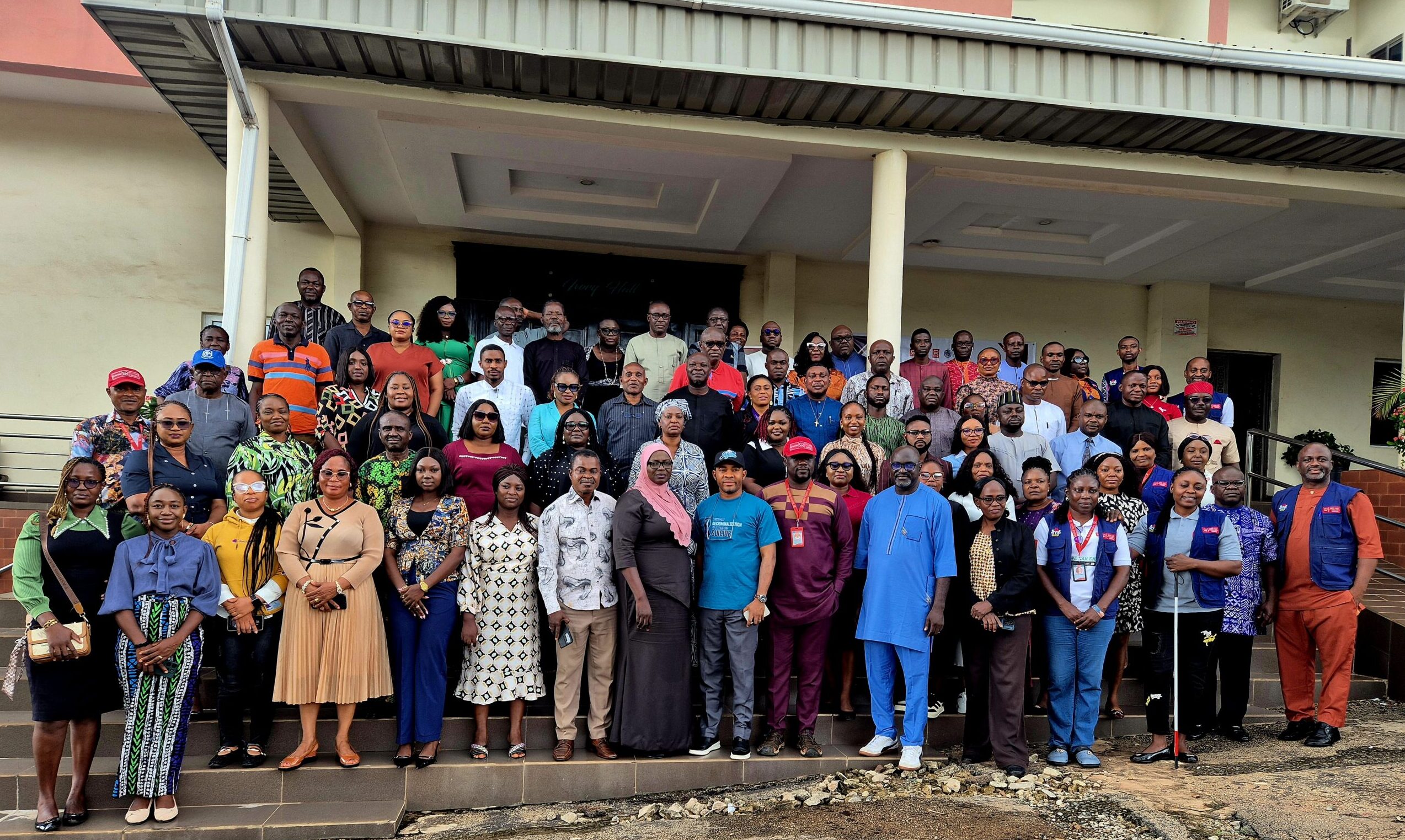
From 21–25 September 2026, the process entered its final co-creation stage through the 5-Day HCD-Inspired Co-Creation Workshop to Develop an SBC Package for Reduction of Leprosy-Related Stigma in Enugu.
The workshop brings together representatives from all 13 participating states — Abia, Akwa Ibom, Anambra, Bayelsa, Benue, Cross River, Delta, Ebonyi, Edo, Enugu, Imo, Rivers and Taraba — alongside national-level stakeholders, media professionals and persons with lived experience of leprosy. The attendance includes state programme managers, Leprosy/Buruli Ulcer focal persons, ACSM personnel, health educators and journalists from radio and television organisations.
This stage brings together an unusually broad mix of perspectives: representatives of the National Tuberculosis, Buruli Ulcer and Leprosy Control Programme, the Federal Ministry of Health’s NTD programme, national and state leprosy programme actors, programme teams from RAN-supported states, radio and television professionals, communication practitioners and, critically, persons with lived experience of leprosy.
The involvement of persons with lived experience is central to the methodology.
Rather than designing interventions based only on assumptions about what people affected by leprosy experience, the Human-Centred Design approach begins with listening.
Participants are using desk reviews, empathy exercises, personas, lived-experience discussions, journey mapping and stigma mapping to understand where fear, misinformation, exclusion and other barriers occur in the lives of people affected by leprosy.
From there, the process moves into defining behavioural challenges, generating “How Might We” questions, ideation, concept development, prototyping, peer review and refinement.
The programme’s broader strategic approach similarly describes HCD as a way of moving beyond simple information dissemination towards culturally appropriate, community-led communication and empowerment.


What the co-creation process is expected to produce
The objective is not simply to leave the five-day workshop with another collection of generic health messages.
The process is expected to produce a practical SBC package for leprosy-related stigma reduction that can be adapted and deployed across the 13 RAN-supported states.
The package will include:
- State-specific SBC strategies for stigma reduction, reflecting different behavioural and communication realities across the states;
- a Community Engagement Guide to support structured conversations on leprosy within communities;
- a Sensitisation Guide for Religious and Traditional Leaders, recognising their influence over beliefs and social norms;
- a Media Toolkit for Leprosy Stigma Reduction to support accurate, respectful and human-centred reporting by radio, television and other media practitioners;
- a Sermon Guide to help faith leaders address misconceptions, dignity, compassion and inclusion within religious settings; and
- an SBC tool for Community Health Workers, strengthening their capacity to communicate about leprosy, identify misinformation, encourage early care-seeking and engage communities effectively.
These outputs directly support the wider objective of developing culturally appropriate, audience-specific communication materials and strengthening community and media participation in leprosy communication.
Four objectives underpin the process: developing state-specific SBC strategies; co-creating evidence-based tools and messages that increase knowledge and address stigma; facilitating meaningful media involvement in stigma reduction; and strengthening the SBC capacity of state teams.
Beyond communication materials
Perhaps the most important outcome of this process will not be any individual poster, radio message, toolkit or guide. It will be the shift in how communication about leprosy is conceived. Effective stigma reduction cannot be achieved by telling communities what they should think. It requires understanding why people hold particular beliefs, recognising who shapes those beliefs, listening to people who experience stigma themselves and designing interventions around those realities. That is why this process has moved from review to listening, from listening to stakeholder engagement, from stakeholder engagement to empathy and co-creation, and from co-creation towards implementation and advocacy. For RedAid Nigeria, the goal is ultimately to contribute to communities in which people recognise the early signs of leprosy, know that treatment is available and free, seek care without fear and understand that a diagnosis should never become a reason for exclusion.
LEPROSY IS CURABLE, STIGMA IS PREVENTABLE
And reducing that stigma begins by putting people, their experiences and their dignity at the centre of communication.


