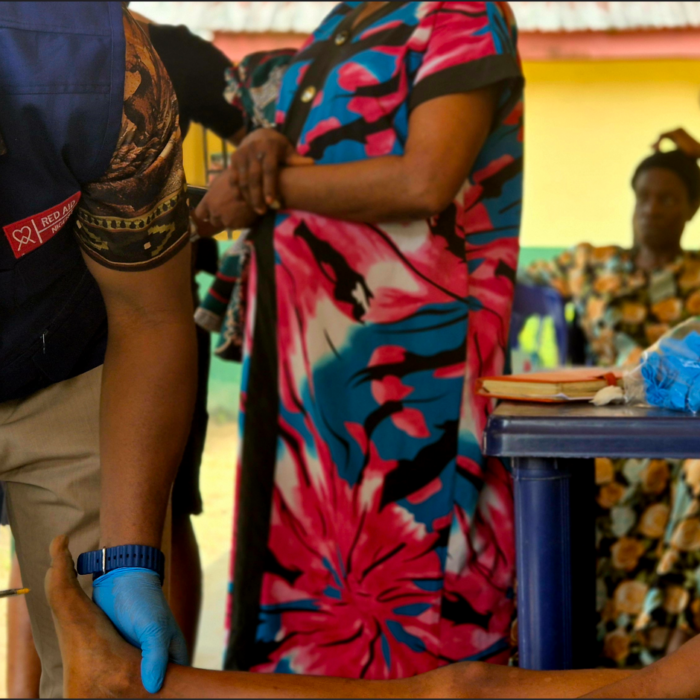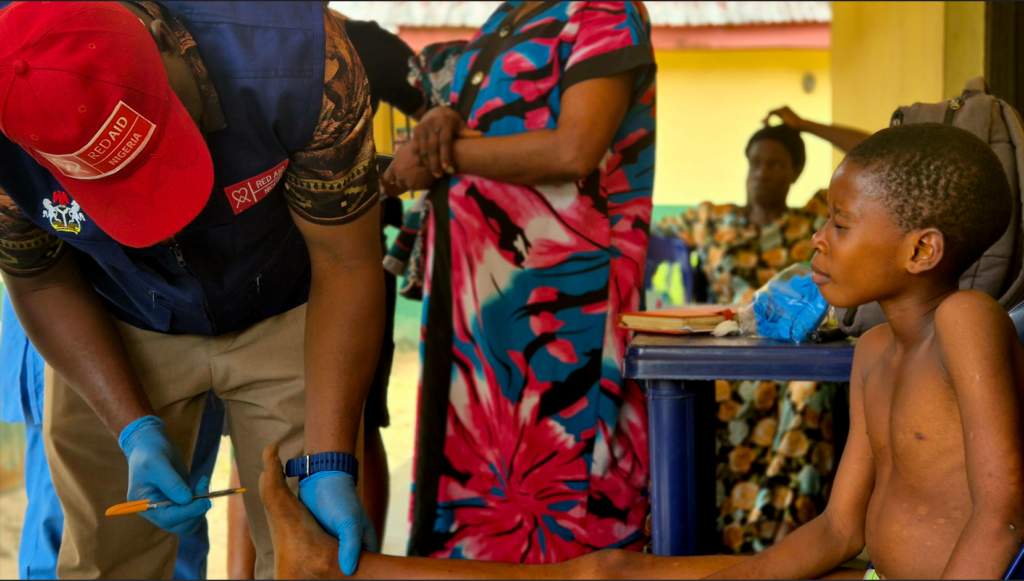
“Unlike when we started, these patients now have confidence in us. They are comfortable talking to us and sharing what they are going through.”
— Rev. Samuel Okon Nwop, First Baptist Church, Etinan
For Rev. Samuel Okon Nwop, that change in confidence was one of the clearest signs that something transformative was taking place.
After one Peer Support Group meeting, a participant stayed behind and asked to speak with him privately:
“Sir, there are more things I want to talk to you about.”
It was a simple request, but it captured one of the central lessons from a year of working with church leaders to strengthen community action against skin neglected tropical diseases in Akwa Ibom State: knowledge can open a door, but trust is what often enables people to walk through it.
That idea sits at the heart of the NTD-Mission Project, implemented by RedAid Nigeria with support from Hope Rises International in Etinan and Ibiono Ibom Local Government Areas.
Led by Dr. Onyeka Ugwu, Project Manager at RedAid Nigeria, the project worked with local churches not merely as venues for health talks, but as part of a wider community pathway connecting people to spiritual upliftment, information, referral, psychosocial support, and clinical care.
Church leaders were trained to recognize signs that might suggest leprosy, Buruli ulcer, lymphatic filariasis, and other skin NTDs; provide accurate information; help reduce stigma and misconceptions; support affected people; and refer suspected cases to trained health workers and appropriate health facilities. They were never expected to diagnose or treat. Their value came from something different: their presence, relationships, and enduring influence within the communities they already serve.
Phase One Impact at a Glance (July 2025 – June 2026)
Beyond Outreaches: Moving from Participation to Ownership
As the project progressed, church leaders began moving beyond participation in scheduled activities. Some used their own networks to sensitize fellow pastors, incorporated health messages into routine church services, encouraged individuals with suspected conditions to seek medical evaluation, and accompanied families through referral pathways.
This was vital because stigma and misinformation around diseases such as leprosy can often be reinforced by cultural and religious misinterpretations. The same community influence, when supported with accurate medical knowledge, can instead nurture understanding, compassion, and timely health-seeking behavior.
For affected persons, care did not terminate after initial screening or referral. Regular Peer Support Group meetings provided dignified spaces to practice self-care, discuss wound management and hygiene, receive psychosocial counselling, and share experiences with peers walking similar journeys.
Importantly, project records confirmed that detection is only half the battle. Many patients faced financial hurdles for transport, fear of hospital admission or surgery, childcare constraints, and family anxieties. The experience reinforced a vital public health lesson: active case-finding only bears fruit when individuals are guided and supported across the entire continuum of care.
Refresher Review & Recognition of 15 NTD Ambassadors
At the culmination of Phase One, RedAid Nigeria convened a two-day project review and refresher meeting on 29–30 June 2026. Church leaders, frontline health workers, community volunteers, and state programme officers evaluated lessons learned and refined priorities for the future.
One of the milestone moments was the official recognition of 15 participating church leaders as NTD Ambassadors for their outstanding dedication to community mobilization, patient referral, counselling, and self-care group facilitation.
Following this proven track record, the project was approved for a one-year extension (July 2026 – June 2027), scaling into Obot Akara LGA as an additional implementation site.
Official Project Knowledge Products
RedAid Nigeria has published three comprehensive knowledge assets detailing the operational models, implementation evidence, and scalable architectures from Phase One:
Case Study
From Stigma to Stewardship
Community detection, referral pathways, and holistic support for skin NTDs in Akwa Ibom State.
Learning Brief
What It Took to Make Faith-Based Skin-NTD Action Work
Eight practical operational lessons on co-design, role clarity, and referral navigation.
Innovation Brief
Faith Networks as a Last-Mile Detection and Support System
A linked 5-pillar system architecture connecting communities, clinicians, and digital data.
The NTD-Mission Project is implemented by RedAid Nigeria with support from Hope Rises International.