.svg)

Finding TB where the public system does not look
Most people with tuberculosis in Nigeria first walk into a private clinic, a pharmacy or a church-run facility. This component of Global Fund grant GC7 meets them there.
Funder
The Global FundGrant GC7, January 2024 to December 2026
Principal recipient
Institute of Human Virology NigeriaRedAid Nigeria is sub-recipient for one component
States
Benue, Delta, Edo, TarabaThree lead community-based organisations in each
Model
Hub and spokeScreening at private facilities, diagnosis at laboratory
Private providers are where the missing cases are.
Nigeria’s National Tuberculosis and Leprosy Control Programme reports cases through public facilities. A large share of people with symptoms never reach one. They attend a private hospital, a patent medicine vendor, a mission clinic or a pharmacy, and if the staff there do not recognise the disease and do not have a route to a laboratory, they are counted nowhere.
CPPM closes that gap from both ends. Community-based organisations work the community end: finding people with a persistent cough, screening them, and referring those who screen positive. Public-private mix coordinators work the facility end: training private providers, placing screening inside their consultation flow, and making sure a presumptive case becomes a tested case.
The component does not run parallel services. Every confirmed person is treated within the national programme, so the outcome is recorded in the same system that would have recorded them if they had walked into a government hospital.
- Three lead community-based organisations per state carry community case finding in Benue, Delta, Edo and Taraba.
- Ad-hoc linkage coordinators move specimens from collection points to the diagnostic laboratories that can process them.
- Private facility screening puts a TB question in front of people who came for something else.
- Direct referral into treatment for every confirmed case, through the state programme.
The distance between a cough and a diagnosis is a logistics problem.
A sputum sample is only useful if it reaches a machine that can test it while the person is still willing to come back for the result. In the four CPPM states that distance is the binding constraint, not the willingness of patients or the competence of staff. The component treats specimen movement as its own function with its own staff, rather than as something a busy clinician is expected to arrange between appointments.
| Step | What happens |
|---|---|
| Screening | A community volunteer, CBO or private provider identifies someone with TB symptoms and records the screening. |
| Specimen | Sputum is collected on site, labelled and logged against the person, not against the facility. |
| Movement | A linkage coordinator carries the specimen to a laboratory with capacity to test it the same day. |
| Result | The result returns to the referring point and the person is traced, not left to return on their own. |
| Treatment | A confirmed case is enrolled in the state TB programme and enters the national treatment register. |
Each step is auditable, which is what makes the component reportable to the Global Fund: screeners, specimens, results and enrolments are four separate counts that have to reconcile.
Five cadres, each owning one link in the chain.
The component is staffed by named roles rather than a general project team, so that a failure at any point in the referral chain has an owner.
- State Technical Officers hold the component together at state level and answer to the state programme and to IHVN.
- State TB-HIV Technical Assistants carry the clinical and reporting standards into facility work.
- PPM Cluster Coordinators organise private providers in clusters rather than one at a time.
- State TB-HIV Cascade Monitors track people from screening through to treatment enrolment, and find those who drop out between the two.
- Sample Movement Consultants are the logistics function: getting specimens to laboratories that can test them.
Review is scheduled, not improvised.
A component delivered across four state programmes and a national principal recipient needs a fixed rhythm or it drifts. In 2025 that rhythm held: TB-HIV coordinating meetings chaired by each state’s Director of Public Health in all four states, and quarterly state and zonal review meetings where performance against targets is examined with the people responsible for it in the room.
The component also took part in the national calendar. World TB Day and National Childhood TB Testing Week were marked across Benue, Delta, Edo and Taraba, which matters beyond commemoration: childhood TB is systematically under-diagnosed, and a testing week is one of the few moments when children are looked for deliberately.
Coordinating meetings chaired by the Director of Public Health in each state, and quarterly state and zonal reviews, are what keep a four-state component accountable to the programme it serves.
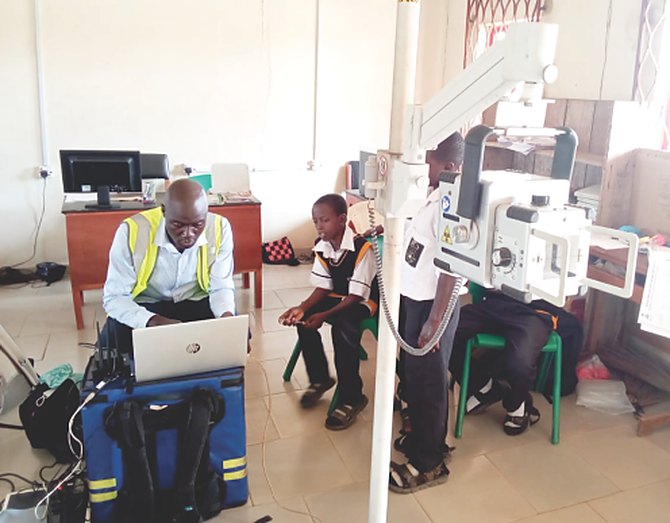
Portable X-ray moved from the community into the facility.
2025 was the year portable digital X-ray was introduced at scale in the component. It began in community settings, where a chest image can be taken at the point of screening and read remotely, and later moved into facility-level work. For a person who has no reason to trust that a long journey will end in a diagnosis, an image taken where they already are changes whether they stay in the process.
It also changes what the component can find. Sputum testing misses a proportion of people who are coughing; an image taken on the same visit, read by someone qualified to read it, recovers a share of them before they disappear from follow-up.
-
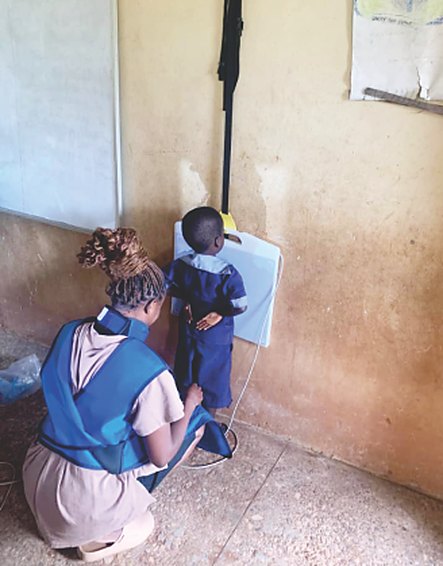
Screening at a private facility in one of the four CPPM states. Report, CPPM chapter. -
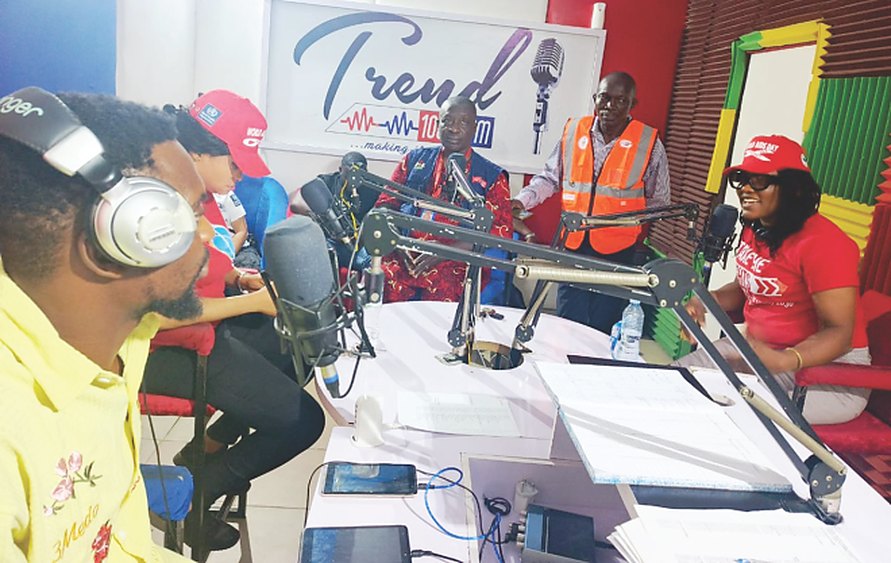
Coordination under the component. Report, CPPM chapter.
Dr. Charles Nwafor, Director of Programs. Oversight of Global Fund GC7 TB PPM sits in his portfolio. The component's five cadres report through the state technical officers to IHVN as principal recipient. Leadership and trustees