.svg)

Contributing to Resilient Communities in Southern Nigeria
RedAid Nigeria’s core programme, funded by DAHW, works with the federal and state control programmes in thirteen states and 257 local government areas.
Funder
DAHWGerman Leprosy and Tuberculosis Relief Association
Project period
January 2024 to December 2026
Coverage
13 states, 257 local government areas11 in the South-East and South-South, 2 in the North-East and North-Central
Project manager
Dr. Martin Ikechukwu NjokuSenior Programme Manager, TB and NTDs
Health services, delivered alongside the public system rather than in place of it.
RedAid Nigeria supports the Federal and State Ministries of Health through the National and State Tuberculosis, Leprosy and Buruli Ulcer Control Programmes to improve the prevention, early detection and care of leprosy, Buruli ulcer and tuberculosis, as well as other selected neglected tropical diseases. The project works in thirteen states and strengthens community-based case finding alongside the services Nigeria’s public health system already provides.
It is managed by Dr. Martin Ikechukwu Njoku, Senior Programme Manager for TB and NTDs.
The focus is on finding cases earlier, reducing stigma, and linking people to timely treatment and rehabilitation. It also supports the health workers, community volunteers and organisations of people affected by disease who make those services more accessible and more inclusive.
That last sentence describes a method as much as a value. A person who has been cured of leprosy but is still avoided at the market, or still walking on an ulcerated foot because nobody taught them how to look after it, has not been helped by being cured alone.
What the project is accountable for.
- Early detection and treatment. Increase early detection and appropriate treatment of leprosy, Buruli ulcer and other selected skin NTDs.
- Skills and support. Strengthen the skills and support available to health workers, programme teams and community volunteers.
- Awareness and stigma. Improve awareness, encourage timely care seeking and reduce stigma toward people affected by leprosy and disability.
- Referral and rehabilitation. Expand access to referral, surgical, rehabilitative and social support services for people affected by disease.
- Participation. Promote meaningful participation of people affected by leprosy and persons with disabilities in project planning and delivery.
- Reporting and learning. Support stronger disease reporting, data quality, coordination and learning across health programmes.
Thirteen states, 257 local government areas, and the places between them.
Eleven states are in the South-East and South-South geopolitical zones; two are in the North-East and North-Central. Work spans 257 local government areas, including rural, semi-urban and hard-to-reach communities. Community outreach and screening focus on areas where leprosy, Buruli ulcer and other skin NTDs are endemic, or where they may be going undetected.
| Zone | States |
|---|---|
| South-East | Abia, Anambra, Ebonyi, Enugu, Imo |
| South-South | Akwa Ibom, Bayelsa, Cross River, Delta, Edo, Rivers |
| North-Central | Benue |
| North-East | Taraba |
“May go undetected” is the operative phrase. Passive surveillance finds the people who walk into a facility that has a trained clinician and a working microscope. The project exists for the local government areas where one of those three is missing.
Five strands, run in the same communities.
Community outreach and earlier diagnosis
Community volunteers and frontline health workers conduct active case finding, skin screening, referrals and follow-up in communities and schools. School sensitisation helps teachers and children recognise the possible signs of skin NTDs and encourages families to seek care. The project also supports the collection and transport of Buruli ulcer samples so that a suspected case can be confirmed rather than assumed.
Health worker training and programme support
RedAid Nigeria supports training and mentoring for health workers, local government TB and leprosy supervisors, programme managers and community volunteers. State and local government health teams coordinate and supervise much of this activity within the national control programme framework, which is what keeps the work inside the system rather than beside it.
Awareness, participation and stigma reduction
Information materials, community and school sessions, public health events and town-hall meetings carry practical information about prevention and care. At the town halls, people affected by leprosy speak for themselves and engage community, religious, women’s and youth leaders. Organisations of people with disabilities and groups representing people affected by leprosy contribute their perspectives to planning and delivery.
Treatment, rehabilitation and inclusion
People identified through outreach are connected to health facilities and referral hospitals for diagnosis and care. The project supports access to medical and surgical services, rehabilitative surgery, protective footwear and assistive devices. It also provides welfare stipends for some elderly people affected by leprosy and supports young people to serve as community volunteer liaison officers.
Data, learning and wider health priorities
The project strengthens routine reporting, digital data collection, supervision and data quality checks so that health teams can monitor services and respond to gaps. It promotes collaboration with research institutions and knowledge sharing among health professionals. It also engages with mental health as a relevant part of care for people affected by NTDs, and supports One Health awareness, including among schoolchildren.
Field photographs
-
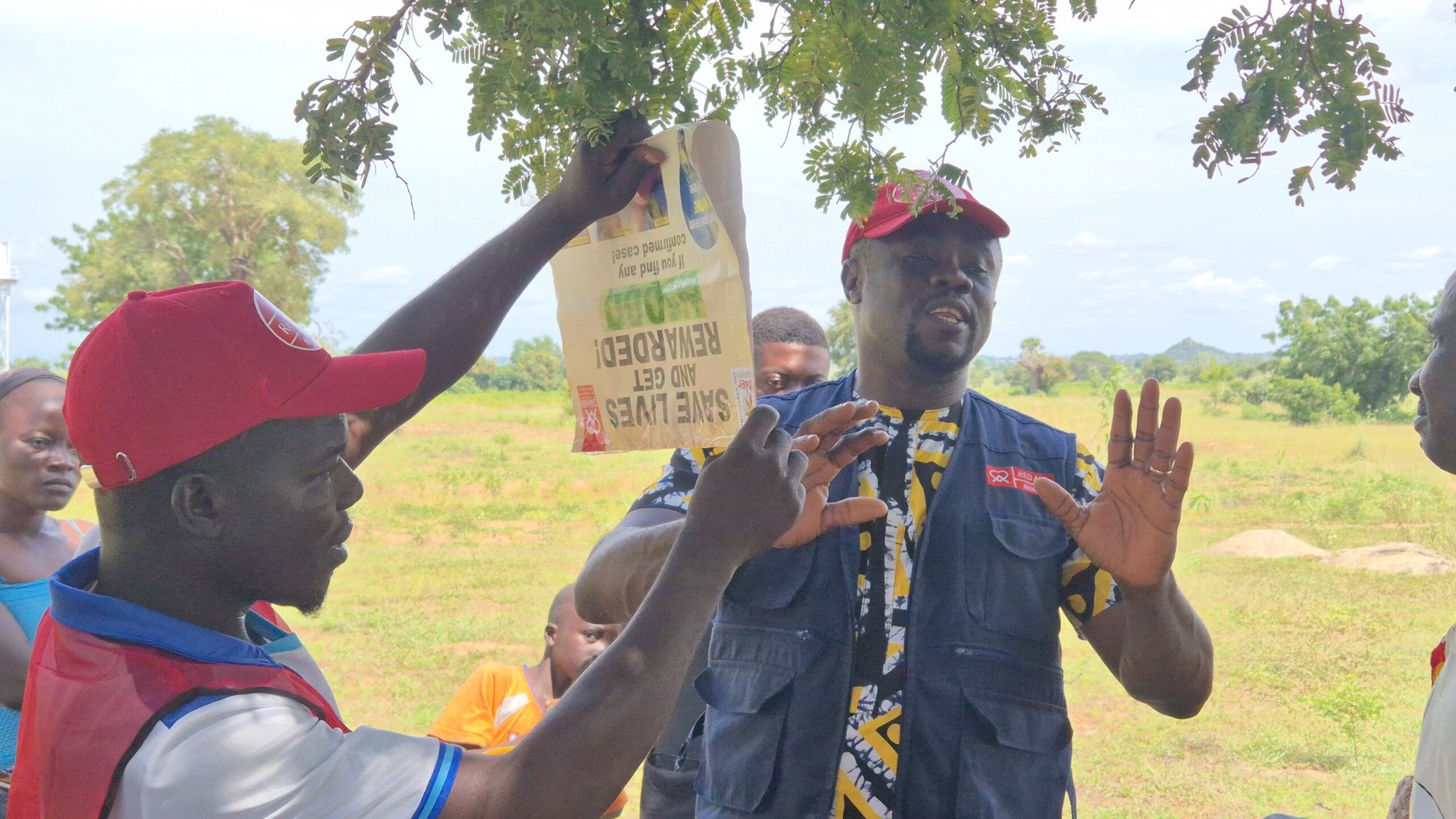
A case-finding poster held up under a tree. -
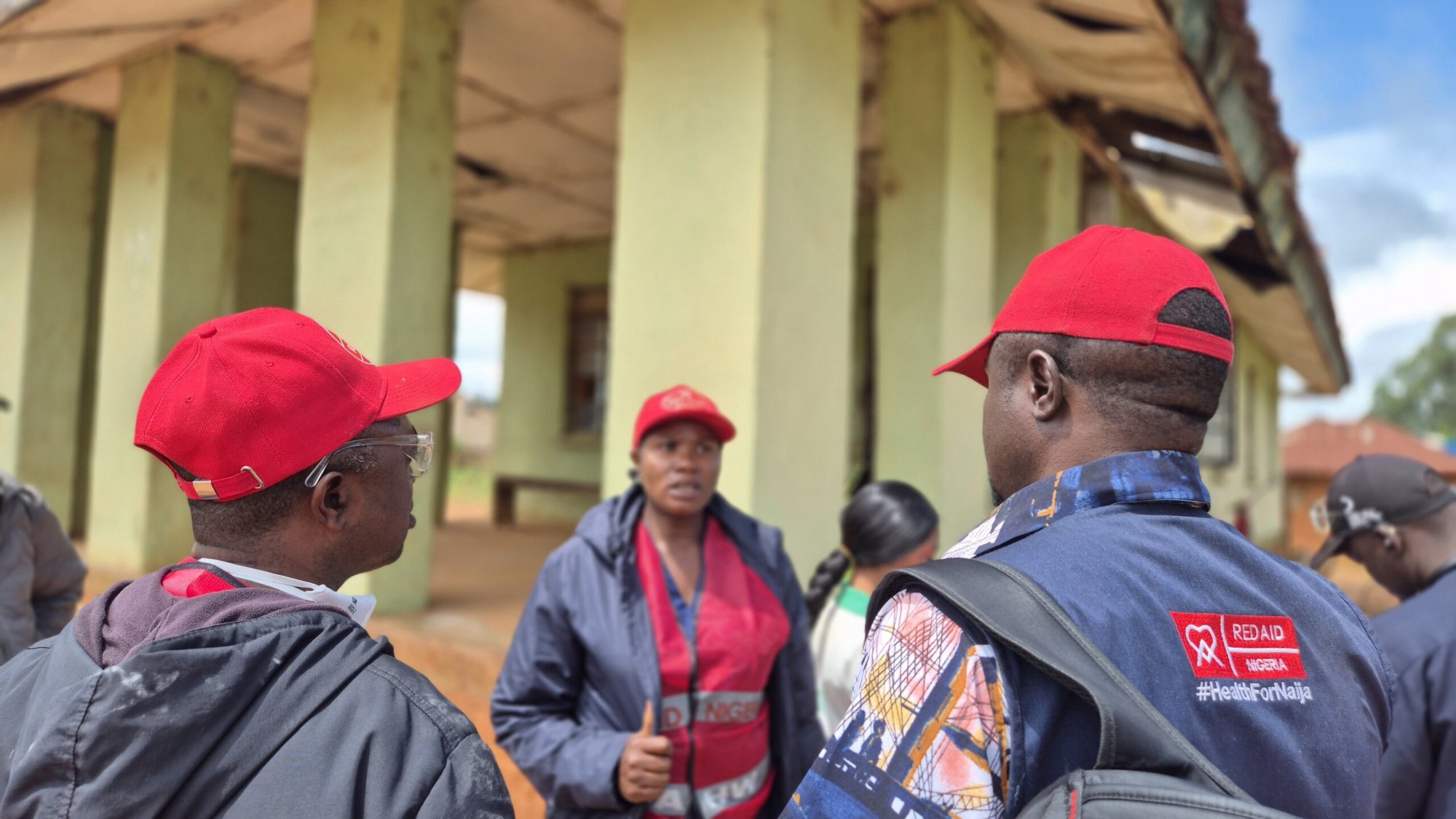
Staff outside a health facility during a supervision visit. -
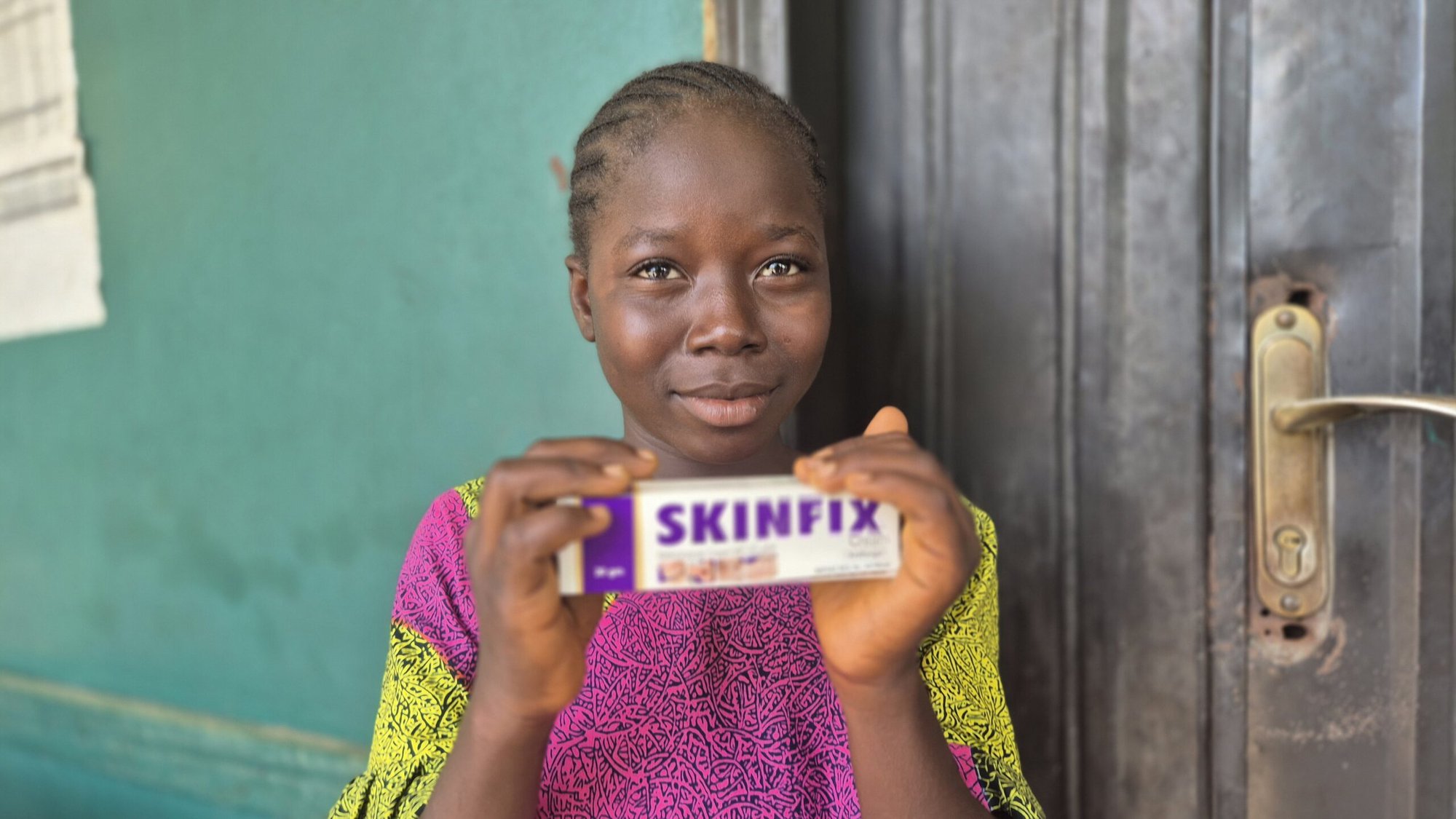
A box of skin care supplies at a doorway. -
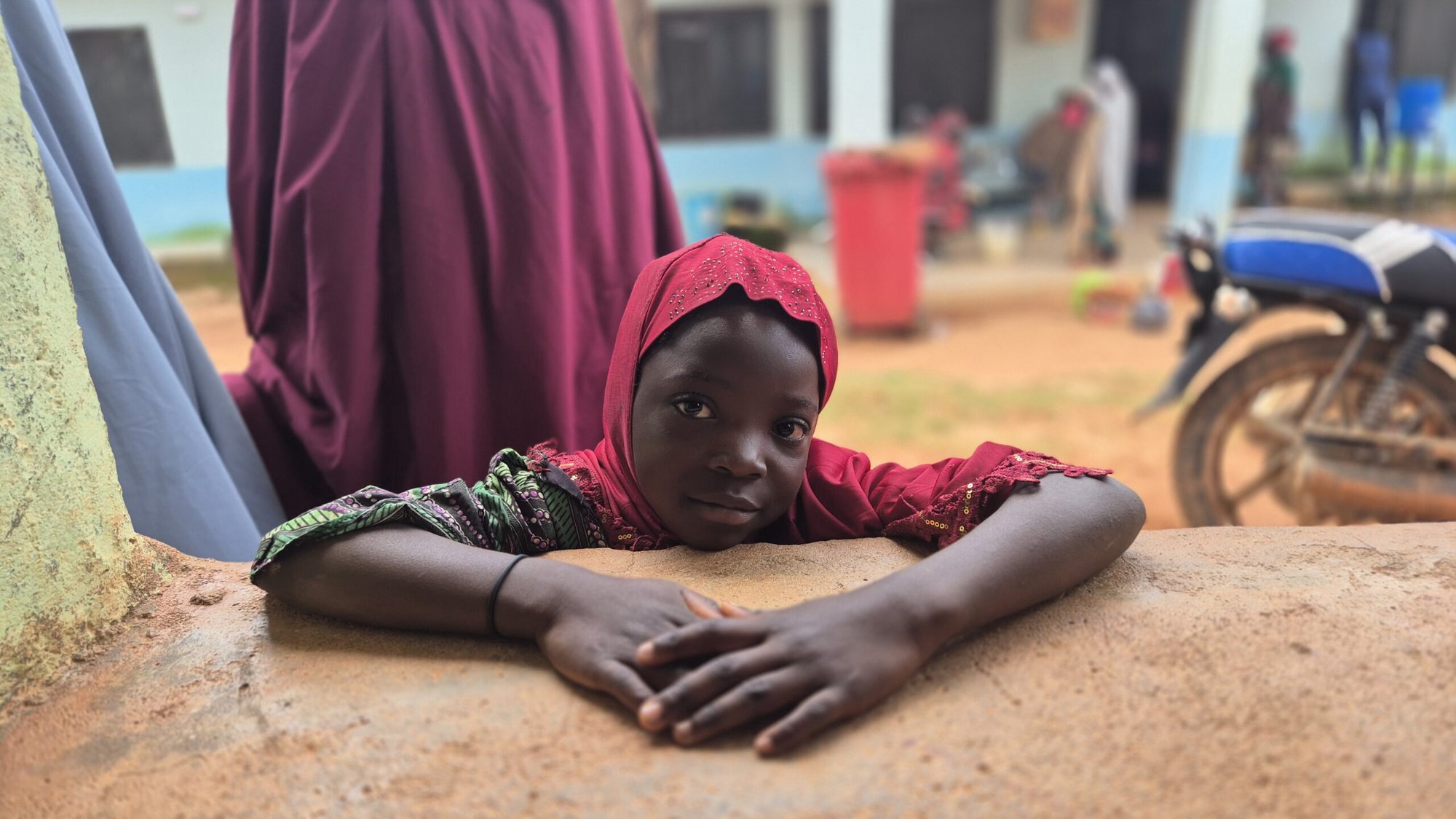
A girl leaning on a compound wall. -
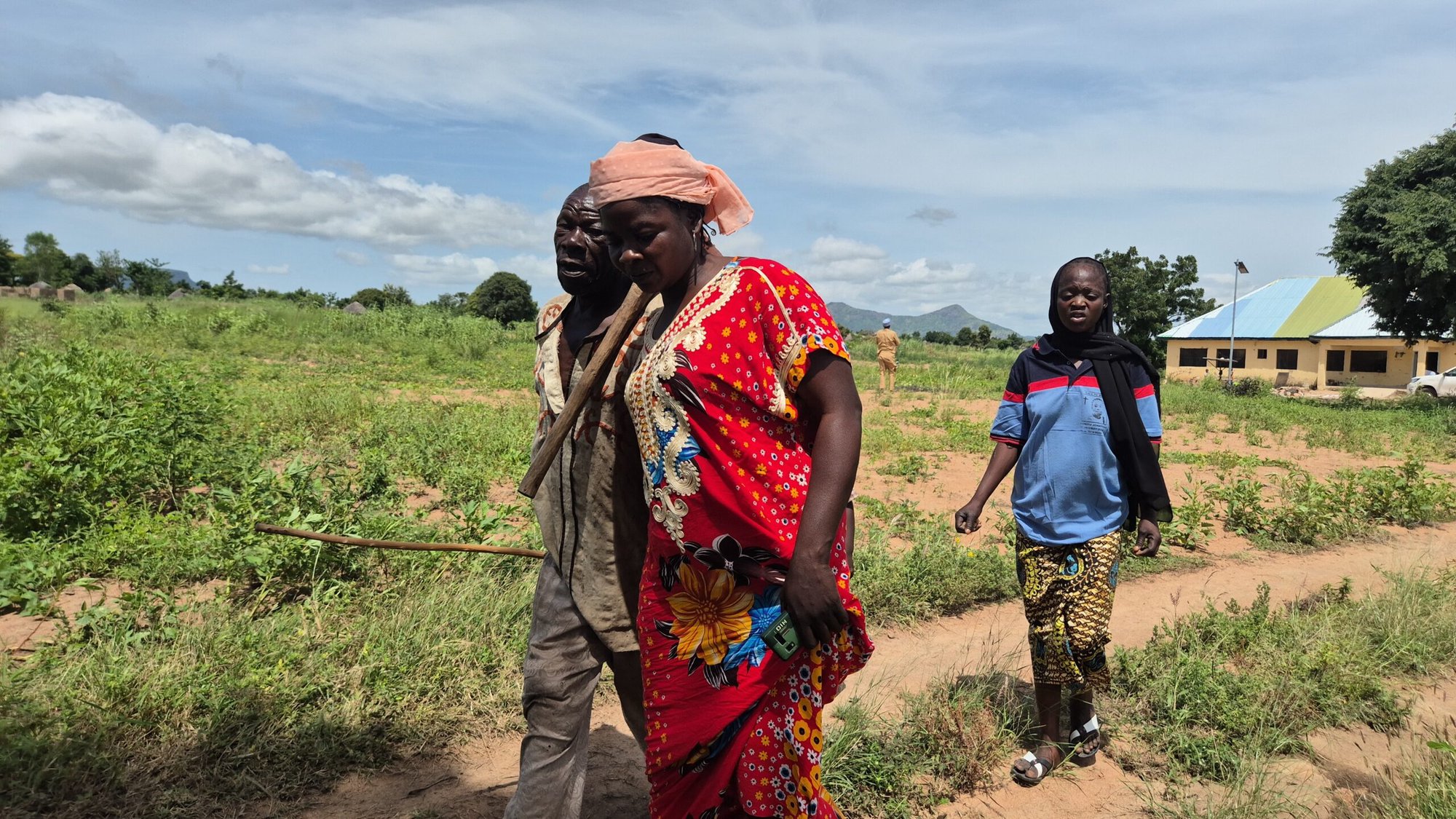
An elderly couple walking along a dirt path. -
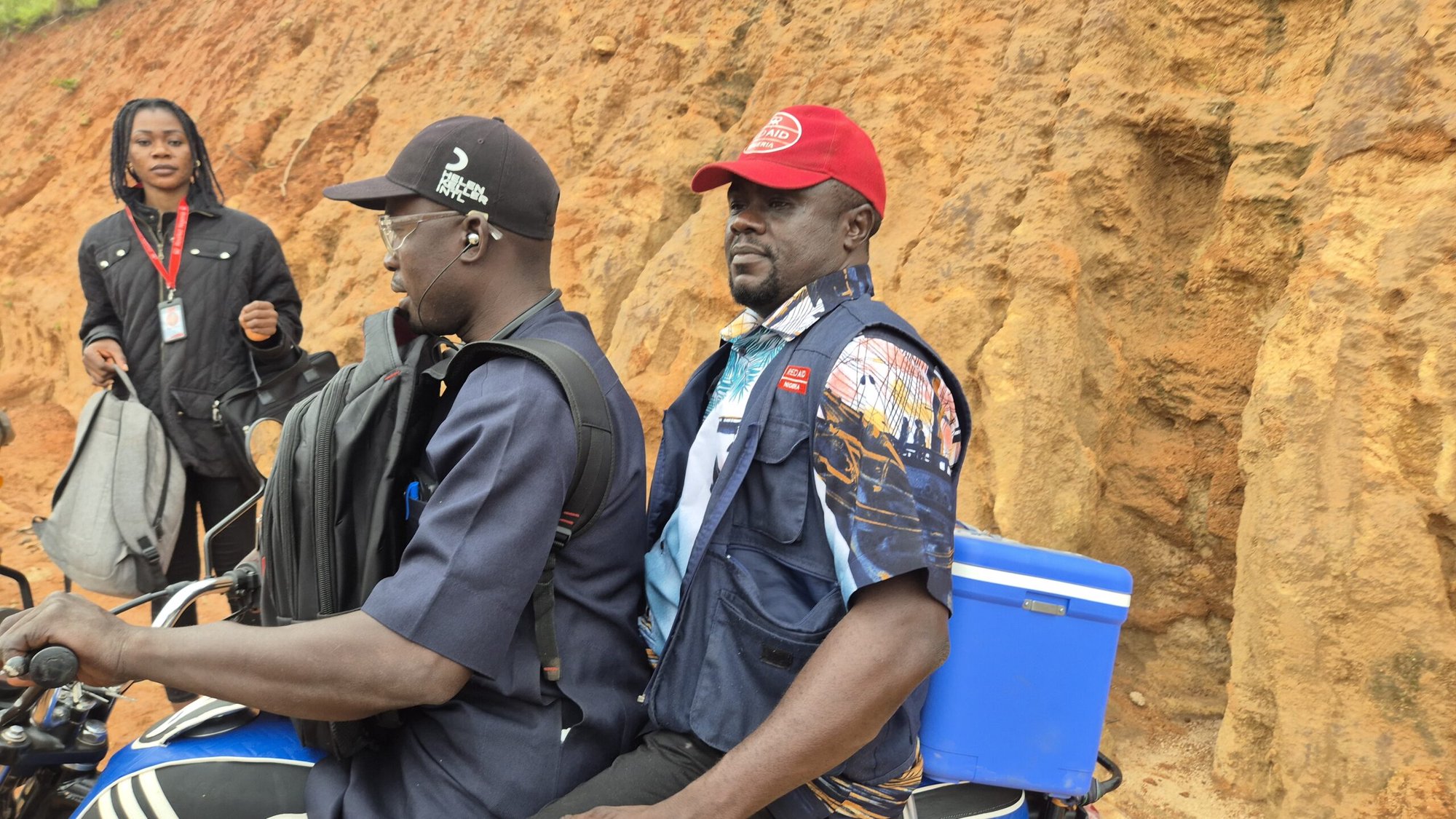
A cooler box strapped to the back of a motorcycle. -
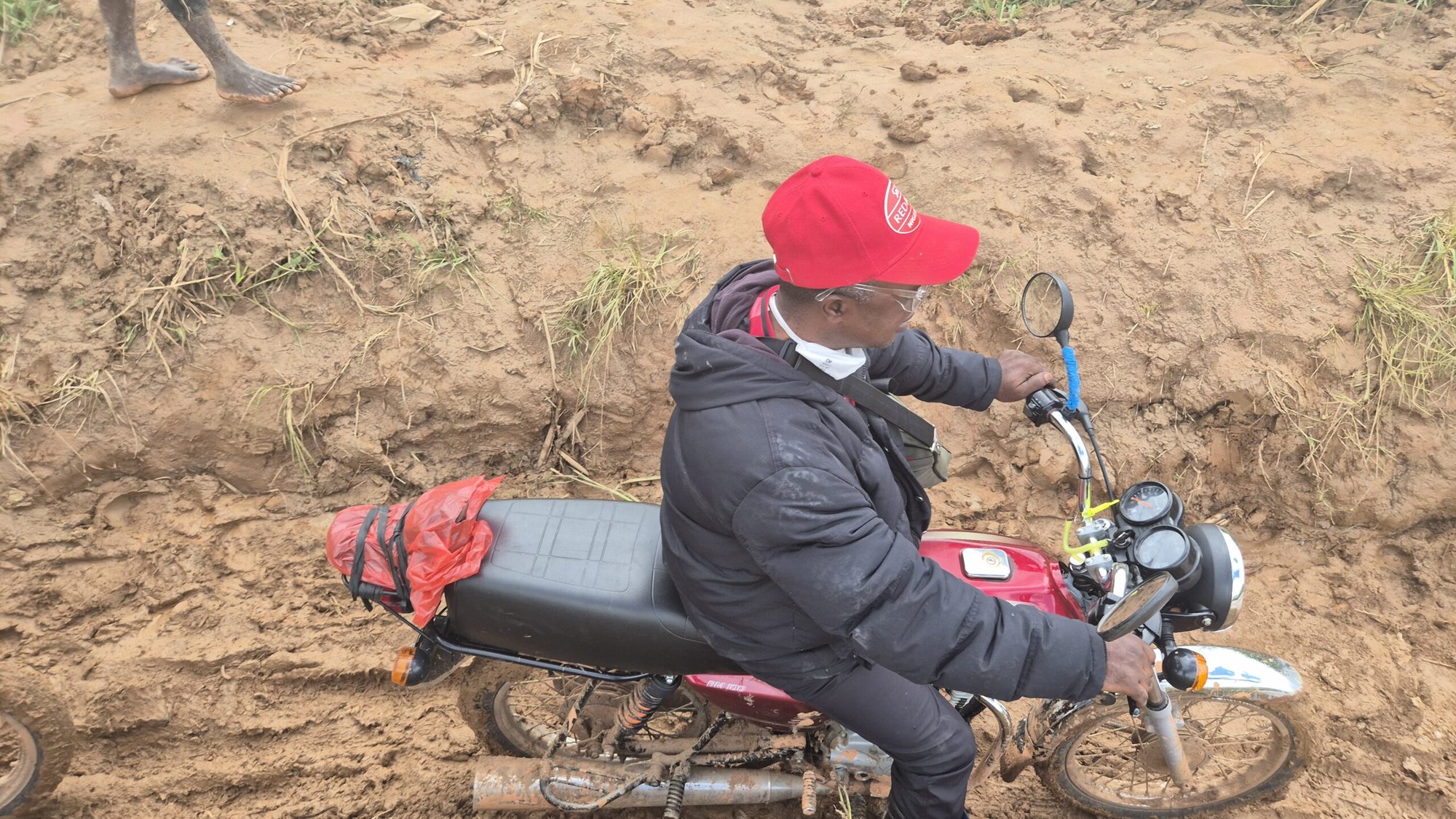
A motorcycle on a rutted track after rain. -
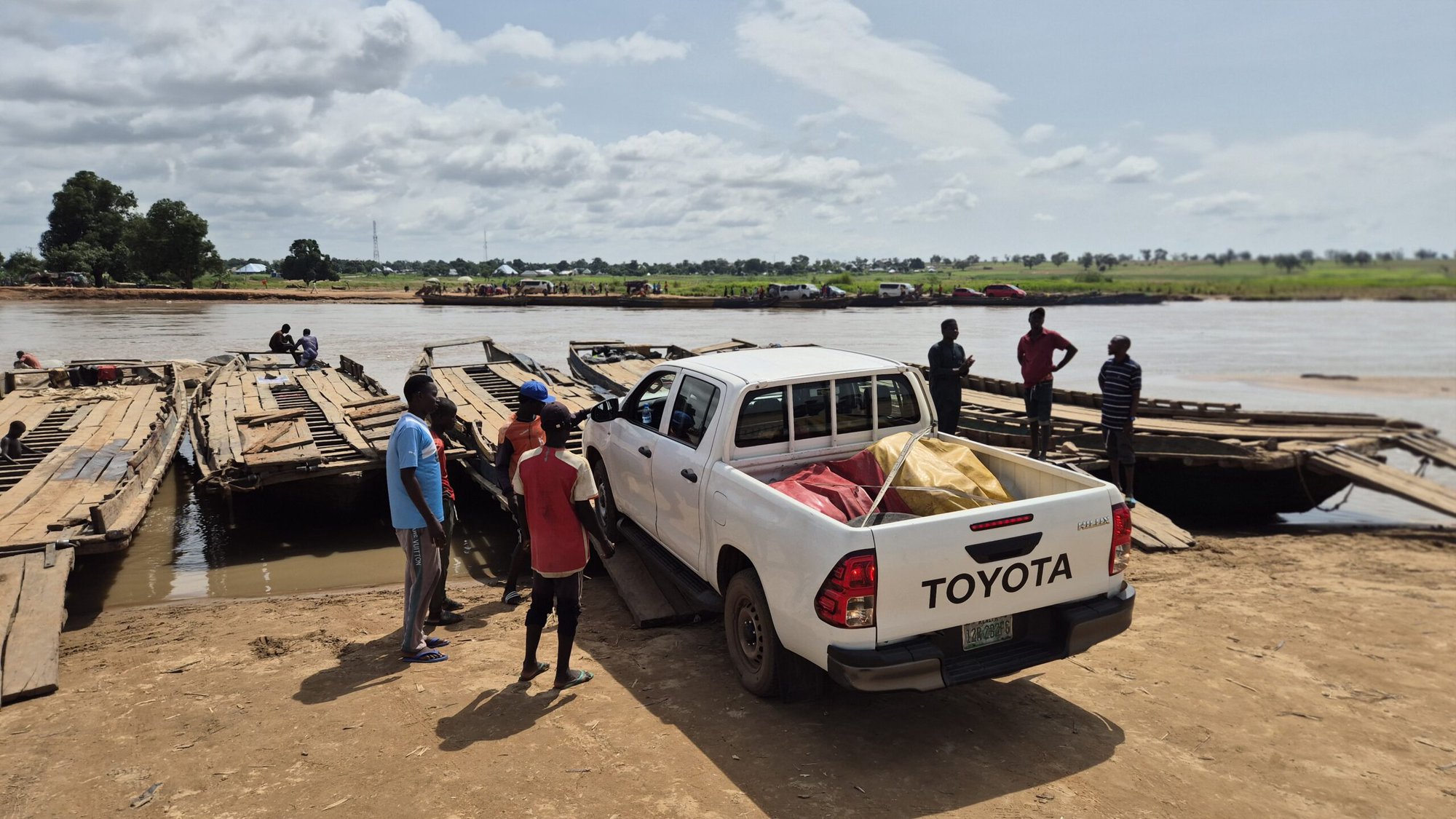
A pickup truck leaving a wooden barge. -
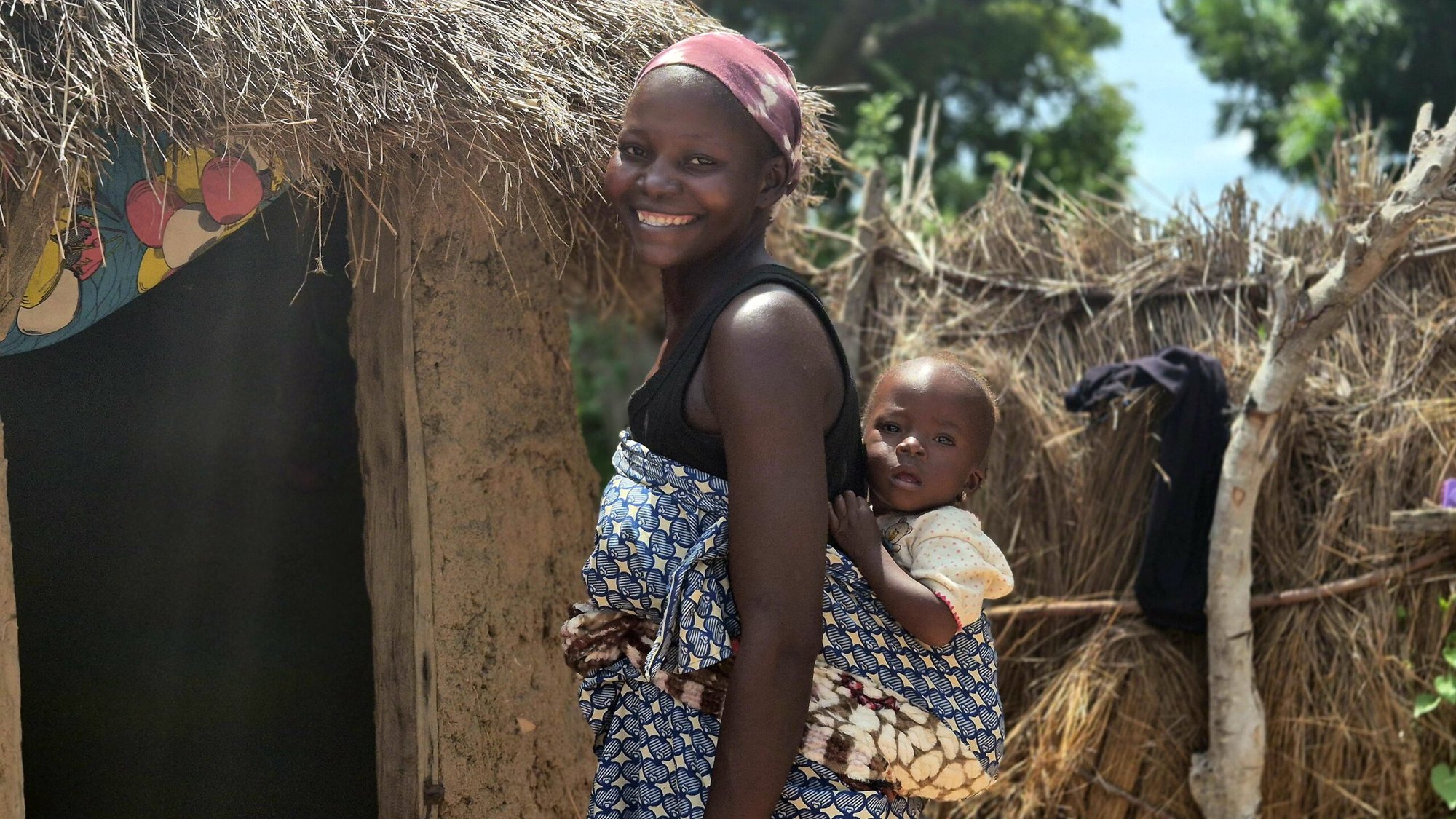
A mother carrying her child outside their home. -
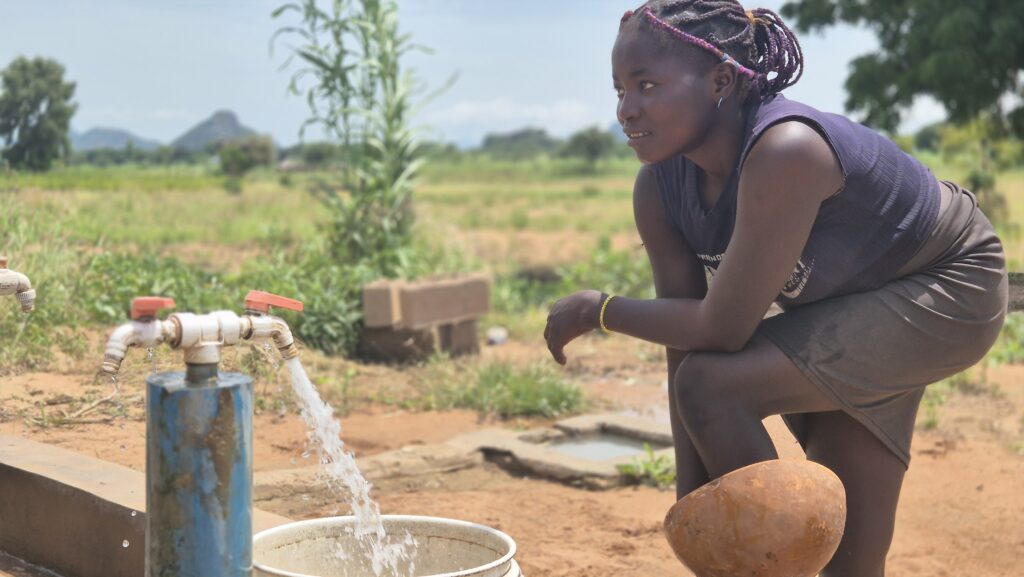
A standpipe filling a bucket.
The 2025 year, as reported.
These are the project’s reported results for the 2025 calendar year, taken from the annual report published in June 2026.
416
new leprosy cases found65% of the 641 notified across the 13 supported states
140
Buruli ulcer cases
135
health workers trainedcommunity and facility, across 45 endemic LGAs
26
surgeries for severe complications
1,000
social and behaviour change materials distributed
10
town-hall meetings on leprosy stigma
Who the 416 were
| Measure | Male | Female | Total |
|---|---|---|---|
| Children | 4 | 11 | 15 |
| Adults | 213 | 188 | 401 |
| Multibacillary | 400 | 400 | |
| Paucibacillary | 16 | 16 | |
| Grade 2 disability at diagnosis | 83 (20%) | 83 | |
| All new cases | 217 | 199 | 416 |
Two figures in that table are the ones to sit with. The 83 people who arrived already disabled lost function before anyone found them, which is the definition of a detection failure rather than a treatment one. And the fifteen children mean transmission is ongoing in these communities now, not in the past.
Recovery and continuity
- 26 surgeries for people with severe leprosy or Buruli ulcer complications.
- 10 self-care group activities supporting daily wound and limb care.
- 21 elderly people received monthly welfare support.
- 50 patients received anti-Buruli ulcer medicines.
- External quality assurance on AFB microscopy in 10 states.
- 307 students from three neighbouring medical institutions given field work support.
- 3 programme managers and 5 local government TB and leprosy supervisors sponsored at the National TB and Leprosy Training Centre, Zaria.
World Leprosy Day and World NTD Day were marked in all thirteen states with three organisations of people affected by leprosy: Purple Hope Initiative, IMPACT Group and IDEA Nigeria. The project’s results were presented at the Union World Conference on Lung Health in Copenhagen and the NNN conference in Kampala.
The project reports monthly, from the field.
The project runs its own monitoring dashboard, populated by community volunteers and facility staff rather than compiled after the fact. In the November 2026 reporting month, across thirteen states and 66 local government areas reporting, the dashboard recorded the following at the point it was last synced.
| Indicator | Figure |
|---|---|
| Persons screened | 5,341 |
| Skin camps held | 141 |
| Suspects registered | 136 |
| Samples taken | 54 |
| Diagnosed cases | 5 |
The dashboard’s honest figure is the one in its “needs attention” column: 25 local government areas were reporting no community volunteer liaison officer in post. Publishing that alongside the screening totals is the difference between a reporting system and a scoreboard.
What the project committed to by the end of its period.
- Screening. Approximately 200,000 people reached through skin camps in selected local government areas.
- Leprosy. 1,114 people supported with diagnosis, treatment, contact tracing or complication management.
- Buruli ulcer and other skin NTDs. 390 people supported on the same basis.
- Rehabilitative surgery. 110 people affected by leprosy or Buruli ulcer supported to access it.
- Assistive devices. 130 people provided with them.
- Capacity building. Approximately 238 health workers and programme staff supported.
- Youth engagement. 77 young people engaged as volunteer liaison officers.
- Treatment adherence. 80 TB treatment supporters following up patients who interrupt treatment.
- Welfare. 50 elderly people affected by leprosy receiving stipends.
The 2025 results above sit against these end-of-project targets, not against annual ones. At the end of 2025 the project was two-thirds of the way through its period and had found 416 leprosy cases, 37 per cent of its case-management commitment, with a year still to run.
Who the project is delivered with.
RedAid Nigeria implements the project with Nigeria’s Federal Ministry of Health and with national, state and local government health programmes, including the National Tuberculosis, Leprosy and Buruli Ulcer Control Programme and the Neglected Tropical Diseases Programme. Peoples’ organisations, community volunteers and referral hospitals contribute to outreach, advocacy, service delivery and inclusion. The arrangement links community-level case finding to the public services responsible for ongoing care.
The intended impact
By bringing communities and health services closer together, the project aims to reduce delays in diagnosis, improve access to treatment and rehabilitation, and strengthen local capacity to respond to leprosy, Buruli ulcer, TB and other selected NTDs. Its work places the experiences, rights and participation of people affected by these conditions at the centre of a more inclusive response.