.svg)

Peer support that does not need a project to keep running
LivEx-2 set out to leave something behind: peer support groups that could go on meeting, setting their own agenda and managing their own money after the project staff moved on.
What it strengthened
Leadership and governance of peer support groupsRun by people affected by NTDs, for people affected by NTDs
Where
Abia, Enugu, BayelsaSeven local government areas
Models used
UPLIFT and BPS-NUPLIFT for champions, BPS-N for health workers
Status
ClosedReported in the 2025 annual report
A support group that depends on a project is not yet a support group.
Peer support groups are the part of NTD work that outlives the funding, if they are built properly. They are also the part that collapses first, because a group of people who have been treated for leprosy or Buruli ulcer rarely has a treasurer, a meeting minute, a bank account or anyone who has chaired anything before.
LivEx-2 worked on that gap deliberately. It did not recruit beneficiaries; it trained the people already leading these groups to govern them, and it trained the health workers around them to support morbidity management and mental health practice rather than take over. The intention was that the group continues when the project does not.
Eight counts, and what each one means.
24
peer support group leaders trainedgovernance, planning and running a group
124
people given self-care and wound-care supportmaterials and services together
10
NTD champions trained on UPLIFT
12
health workers trained on UPLIFT and BPS-N
16
people counselled
39
new scabies cases found and treatedfound through outreach, not referred in
51
advocacy, sensitisation and service outreaches
15
coordination meetingscommunity leaders, health workers, people affected by NTDs
The scabies figure is the one that shows the method working. Those thirty-nine people were not referred by a clinician; they were found because a group of people who live in the community knew what an itchy, crusted rash can mean and had somewhere to send it.
UPLIFT for the group, BPS-N for the clinic.
The project used two training packages, each aimed at a different side of the same relationship. UPLIFT builds the capacity of people affected by NTDs to lead and represent themselves. BPS-N builds the capacity of health workers to manage the psychological and social dimensions of these conditions alongside the clinical ones.
- Ten champions completed UPLIFT and were expected to carry it into their own groups rather than into a project office.
- Twelve health workers completed both UPLIFT and BPS-N, so a referral from a group lands with a clinician who understands what the group was trying to do.
- Sixteen counselling sessions were delivered, which in a project of this size is a signal about how much need sits behind the visible disease.
Training a champion and training the clinician who will receive that champion’s referrals is the whole point. Either alone produces a group that cannot get a referral accepted, or a clinic that has nobody in the community to refer from.
Wound care is daily work, and it has to happen at home.
For people living with the long-term consequences of leprosy and Buruli ulcer, the routine that protects a limb happens at home, every day, with materials that have to be bought. The project supplied self-care and wound-care materials to 124 people, but the materials were the smaller half. The larger half was teaching the routine and agreeing who would check it, which is what a peer support group is actually for.
-
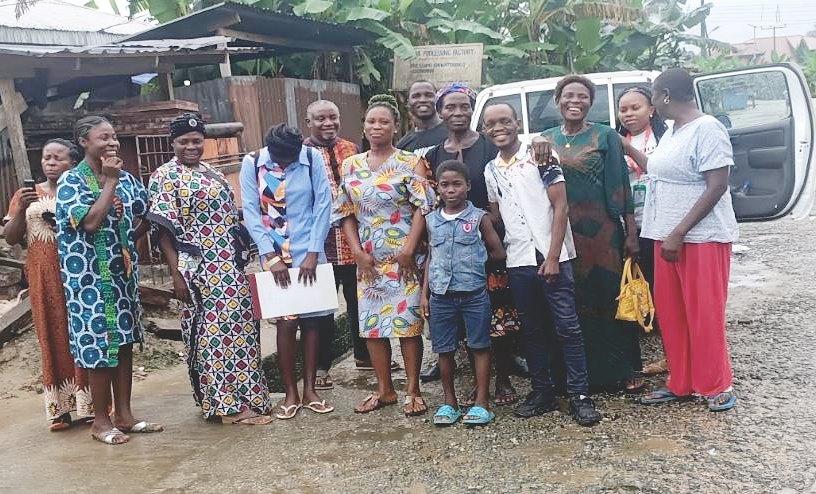
Self-care support under LivEx-2. Report, LivEx-2 chapter. -
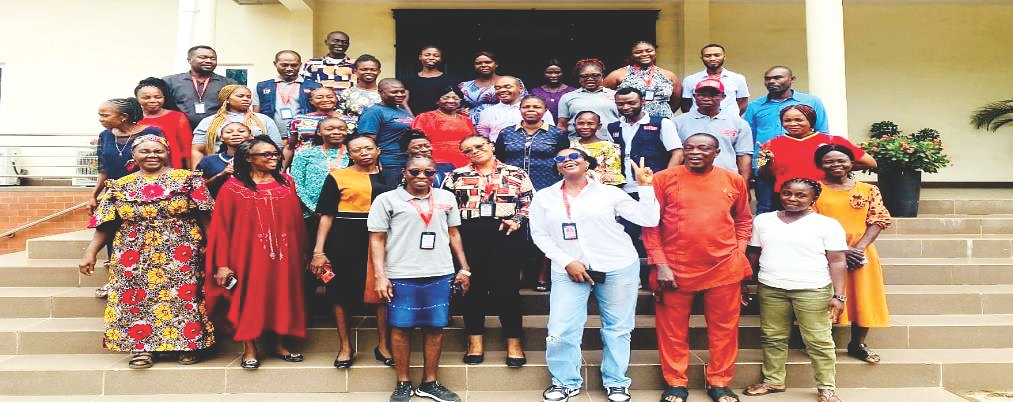
Community outreach under LivEx-2. Report, LivEx-2 chapter.
Three states, seven local government areas.
The report names six of the seven local government areas where the project worked. They are listed here as printed, because a partial list is more honest than a plausible one.
| State | Local government areas |
|---|---|
| Abia | Bende, Obingwa, Umunneochi |
| Enugu | Aninri, Oji River |
| Bayelsa | Ogbia |